There is a version of the morning most of us know by heart. The alarm, the floor, the kettle or the machine, and then the first cup, and then — only then — the day.
We call what happens in that cup energy. It feels like energy. Something comes up from underneath and the fog lifts and the hands stop being slow. But it is worth asking where that something came from, because the body does not make energy out of a bean in eleven minutes. It has to be taken from somewhere.
It is taken from later.
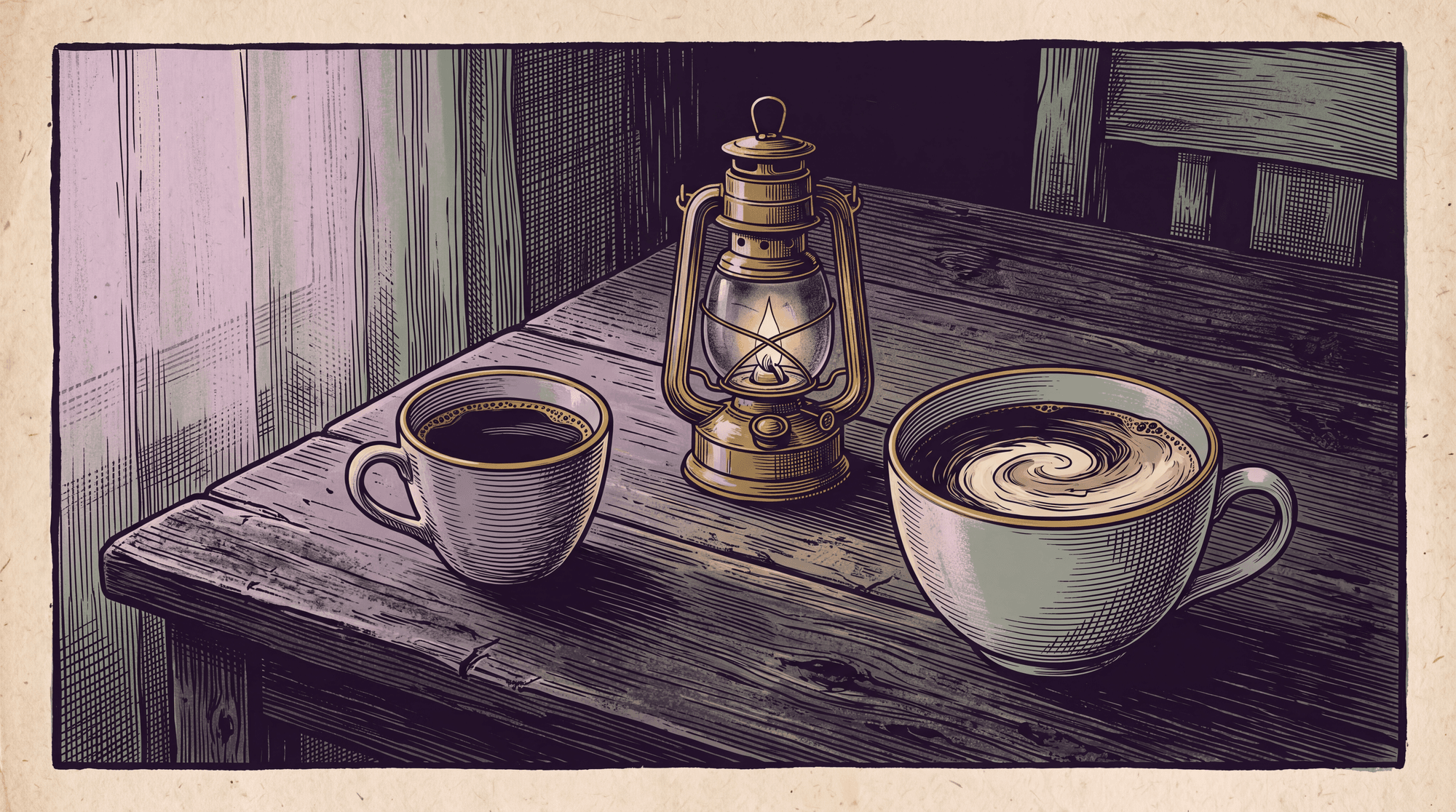
What the Cup Actually Does
The body keeps a ledger of how long it has been awake. As the hours pass, a molecule called adenosine builds up in the brain, and the more of it there is, the heavier the eyelids and the slower the thinking. It is the body’s own honest report: you have been going for this long, and you will need to stop.
Caffeine does not erase that report. It sits down in the chair where adenosine would sit and blocks the message from being delivered. The tiredness is still there, fully accounted for. You simply stop hearing about it. And while you are not hearing about it, the ledger keeps filling — the adenosine piles up behind the block, waiting.
Then the caffeine wears off, and all of it arrives at once. That is the three o’clock wall, and it is not a mystery. It is the bill.
The bill has a longer tail than most people think. Half of a cup is still in you five or six hours after you drink it, which means the two o’clock coffee is still half awake at eight, and it does not leave when you lie down. It thins the deep part of sleep — the part where the body does its actual repair — so that even a full night comes up a little short. And a body that came up a little short wakes needing the cup a little more. After enough mornings like this the cup stops lifting you above the line at all; it only brings you back up to zero. The boost has quietly become the payment on a debt.
There is one more thing in the cup. The body reads the sudden brightness as a small alarm and answers it with a small dose of its own stress chemistry — a nudge of adrenaline, a lift of cortisol on top of the morning’s natural rise. Useful in an emergency. Costly as a daily habit. Every morning you tell the body that something urgent is happening, and every morning it believes you.
That is the loan. Attention now, taken from the afternoon, from the night, and from tomorrow morning, with interest. Nothing about it is free.
The tiredness was never gone. It was waiting behind the cup.
A Loan Is Not a Sin
None of this makes coffee a villain. Coffee is an African plant. She was born in the forests of Ethiopia, carried across the water to Yemen, and given to the world through hands that knew exactly what she was. The Ethiopian coffee ceremony is an hour long. The beans are roasted in front of you, the smoke is passed around, three rounds are poured. Nobody in that room is using her to get through a spreadsheet.
Coffee is a real medicine with a real gesture — a bitter and a stimulant, quick, bright, dispersing. Taken as ceremony, once, with people, she is a gift. The trouble was never the plant. The trouble is a way of living that borrows against tomorrow every single day and never lets tomorrow arrive.
If you can drink her and walk away — one cup, some mornings, no need — this essay is not about you. It is for the one who cannot start without her, who has not felt an unassisted morning in years, and who has started to suspect that the feeling in the cup is not energy at all.
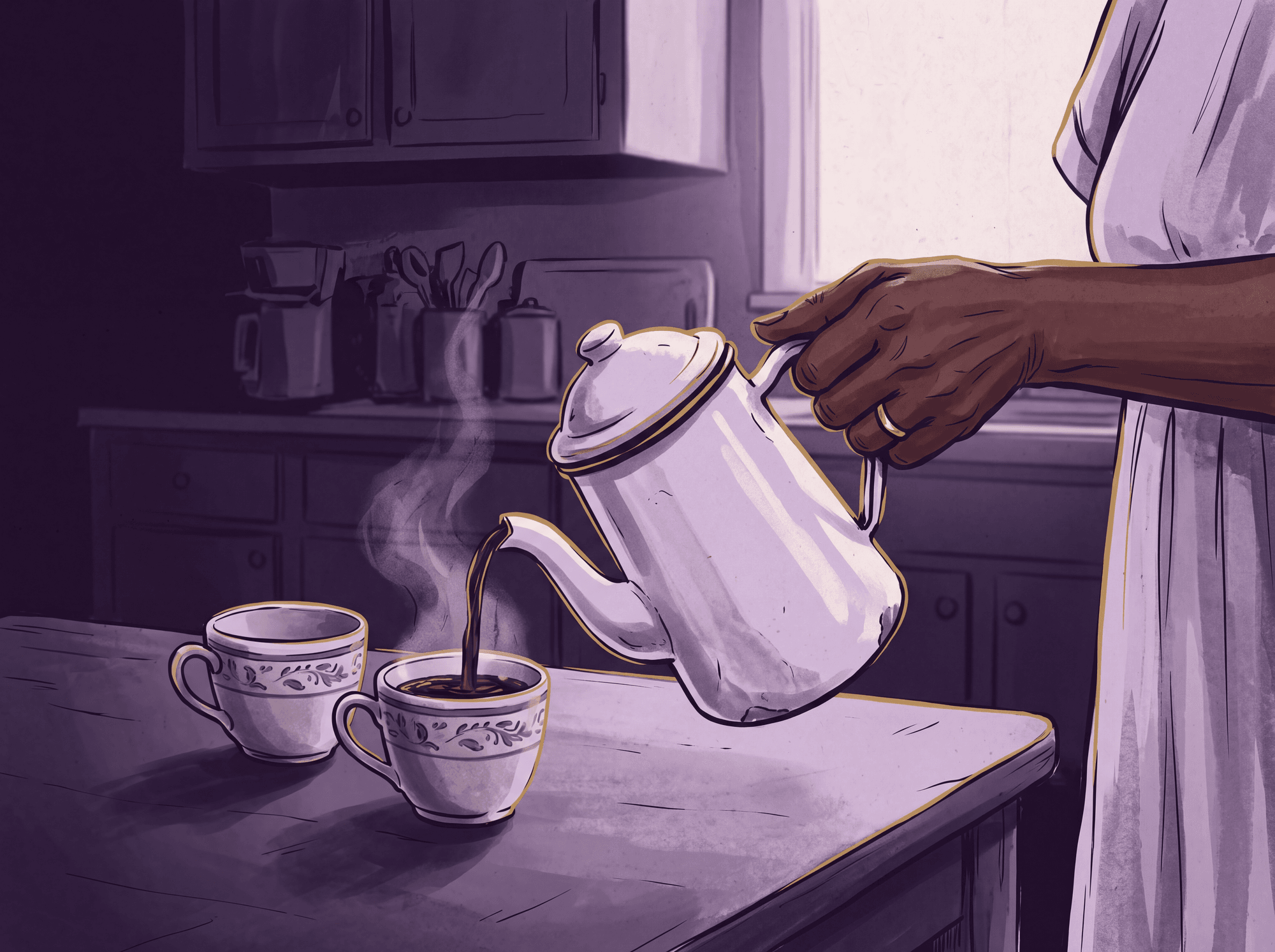
What the Root Gives Back
Chicory is the bitter root by the side of the road, and when she is dug in the fall, chopped, dried, and roasted dark, she brews into something that looks like coffee, sits in the hand like coffee, and takes milk the way coffee does. She has been standing in for coffee for a long time, always in the seasons when the real thing could not be had. When Napoleon closed Europe’s ports to British trade in the early 1800s, coffee stopped arriving on the continent, and the French learned to roast her root instead. During the American Civil War, Union warships sealed off the port of New Orleans so that nothing came in by sea — coffee included — and the city stretched the little it had left by cutting it with roasted chicory. The war ended and the habit stayed; it is still how the city takes its coffee. When the Depression emptied pantries, and again when the Second World War put coffee on the ration card, she came back into the pot. Every time the cup had to be filled and coffee was gone, she was the one people reached for.
She has no caffeine. You will not get the surge. Nothing in her borrows from later. What she gives instead is the morning’s real work: her bitterness wakes the digestion before food arrives, she gets the liver moving, she settles a stomach that has been running hot, and she is warm and dark and slow in the cup. She does not replace the stimulation. She replaces the ritual — the pot, the pour, the first sip in the quiet — and she leaves you with your own energy, whatever it is that morning, un-borrowed and yours.
Some mornings that is less than the cup would have given you. That is the truth of it, and it is also the point. The tiredness you feel at seven without coffee is not new. It is the same tiredness you have been hiding from yourself every day for years, finally allowed to speak, so you can answer it with sleep instead of with a loan.
The recipe for the cup itself — the roasted root, warmed with the spices that make it a morning drink and finished with milk — is The Morning Cup, elsewhere in this issue. What follows here is only how to get from one cup to the other without a hard landing.
Stepping Off the Loan
Unhurried, like everything else about her. The body took years to learn the habit; give it a month to unlearn it.
What you need
- Roasted chicory root, chopped (or the New Orleans blend, which is half chicory already)
- Whatever coffee you drink now
- A small pot and a strainer
- Four weeks, and some patience with yourself
The taper
1. Move the last cup earlier. For the first week, change nothing about how much you drink — only when. Nothing after noon. The afternoon cup is the one that follows you to bed, so retire it first, and notice what a full night does for the next morning before you change anything else.
2. Cut the pot in half with chicory. In the second week, brew your coffee half and half with roasted chicory root. This is how New Orleans drank her for a century, so nothing about it is strange. The cup stays dark, stays bitter, and takes milk the same way. The loan is now half the size.
3. Turn it over. Third week: mostly chicory, with a spoon of coffee for the familiar edge. Expect a day or two of dullness and a headache around this step — that is the debt coming due in the open instead of hiding. Drink water, eat before you brew, and go to bed early. Do not push through it with a bigger cup.
4. Let her stand alone. Fourth week: chicory alone, or chicory with milk and spice. Sit with the cup the way you used to sit with the other one. Notice what the morning feels like when nothing in it is borrowed. Some days it will feel like less. Give those days sleep, and see what a week of that does.
If you want to keep coffee: keep her for the mornings that are ceremony — company, a slow weekend, a pour shared with someone. Drink her the way she was meant to be drunk, and let chicory hold the ordinary mornings.
We talk about time as if it were something we lack, and we go looking for ways to make more of it. The cup is one of those ways. It seems to give you the morning back. It does not. It moves the morning’s tiredness to the afternoon, the afternoon’s to the night, and the night’s to tomorrow, and it charges for the service.
Every borrowed hour was a real hour that belonged to a real day.
The bitter root by the road offers a morning that is entirely yours to spend, whatever there is of it. The people who drank her through blockade and depression did not have a choice about it. We do. Choosing her anyway, with the whole coffee aisle in reach, is its own small act of remembering: that the bitter can feed you, that the shelves were bare once and the cup still got filled, and that a day lived on its own light is not a lesser day.
— The Sage