Cichorium intybus
Chicory is the one you’ve driven past a thousand times. A stiff, ragged stem out of the gravel, a few sky-blue flowers set right against it, open in the morning and shut by noon. In summer that is all most people ever see of her. By fall the flowers are gone and she has taken everything down into a long pale taproot — and the root is the part worth knowing.
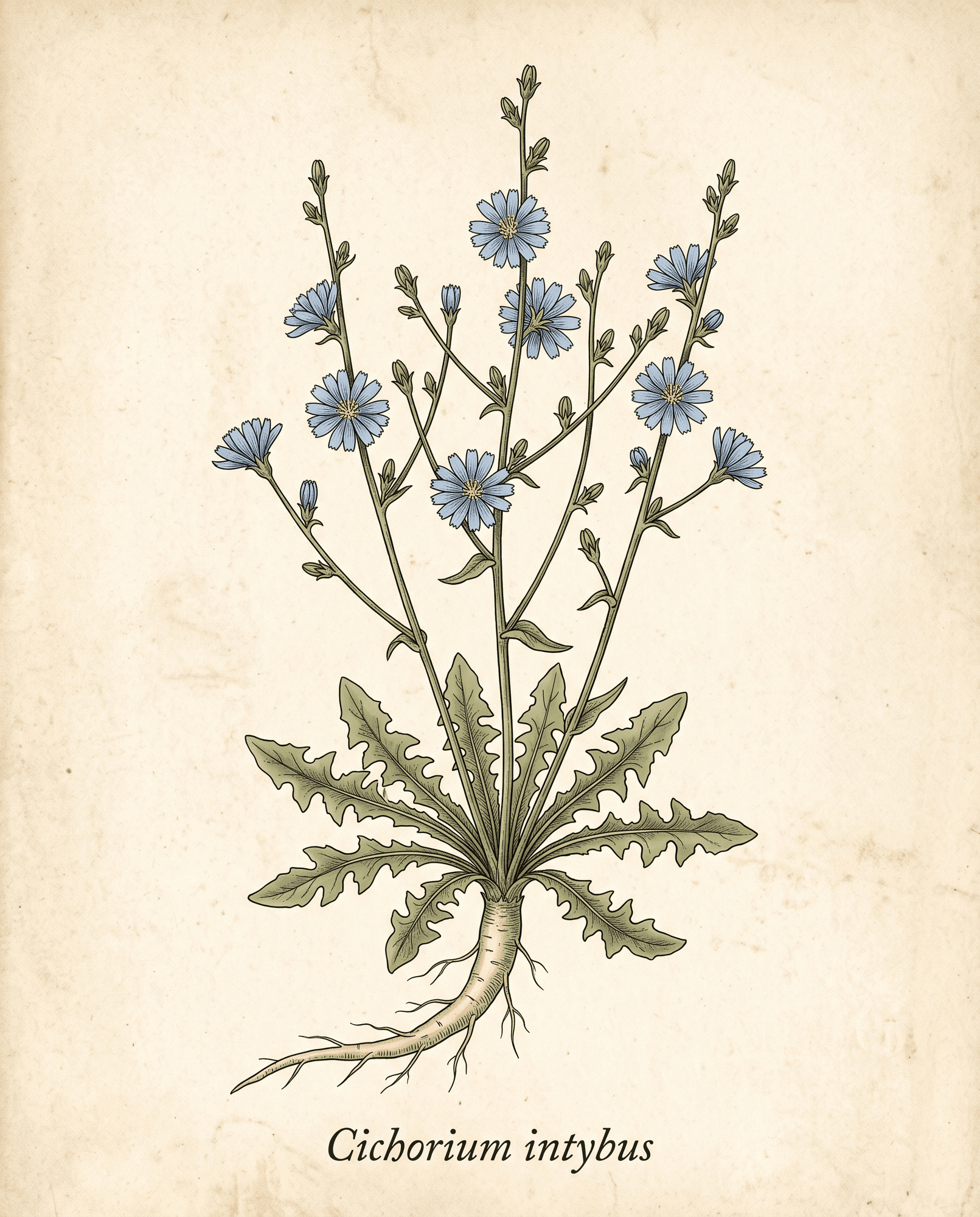
She is a bitter for the liver and the digestion, a cousin of dandelion, and she has fed people through blockade and depression as the roasted “coffee” that stretched the real thing when it could not be had. She grows where the ground has been broken and left — vacant lots, road cuts, the edge of the field — and she makes food and medicine out of soil nobody wanted. Most of us have stopped seeing her. Fall is the season to start.
Two Faces, One Calendar
Everything about working with chicory depends on the season you meet her in. In summer she is the flower — sky-blue, faithful, keeping the sun’s hours by an empty road. In fall she is the root — pale, bitter, dense with what she stored all summer, dug after the flowers are spent and the leaves have died back, then roasted dark until the bitterness leans toward sweet. The flower is her face. The root is her medicine, and autumn is when she hands it over.
Her Medicine Is Clearing
Where summer’s ally built and coated, chicory clears. Bitter, cooling, and dry, she moves downward: she wakes the digestion before food arrives, gets the bile flowing so the liver can hand off what it has been holding, and drains the damp, heavy heat of a system that has been running hot and eating rich. She is for a flat appetite, a stomach that sits heavy after a big meal, a temper that boils by afternoon. And unlike most cooling bitters, she strengthens the stomach while she works — which is why she can be a daily cup for a whole season without wearing you down.
A Practice for the Season
For one week, begin the morning with the bitter. A small cup of the roasted root, simmered ten minutes and taken before anything else — no sweetener, no milk, not yet. Let it be as bitter as it is. Notice what your appetite does across the week, and your patience, and whether the heaviness after meals begins to lift. The recipe that turns this cup into something you’ll want every day is The Morning Cup, elsewhere in this issue; for now, take her as she comes.
A Plant Walk, Wherever You Live
Go looking in the worst ground you can find — the gravel lot, the road cut, the median, the margin of a field after the machinery has passed. The flowers are gone now, so look low, for a basal rosette of toothed, dandelion-like leaves with the dry stiff stalks standing above it. That is her. If you’d like to dig, do it somewhere clean — a field or a garden rather than the roadside itself, because a taproot pulls up what the road leaves behind. If she doesn’t grow near you, do the walk in the grocery store. She is in the produce aisle as endive and radicchio, her cultivated daughters, and in the coffee aisle in the red cans out of New Orleans. Notice that she is on both shelves, and that no one calls either one a weed.
She keeps the sun’s hours all summer and then gives everything to the root. The bitter is the gift.
— The Sage
Go deeper. The full Chicory monograph lives in the Materia Medica library — her energetics and pharmacology, the New Orleans coffee lineage and the women who built it, her Ayurvedic and Chinese readings, methods and dosages for root, leaf, and flower, and a tarot spread for entering into relationship with her as an ally. It’s included with Herb-Curious membership, along with the whole library.